Aviat Networks

Aviat Networks has one of the longest histories of all microwave providers. Started in 1984 as Digital Microwave Corporation, the Company has undergone several name changes. From DMC Stratex Networks to Stratex Networks to Harris Stratex to arrive at Aviat Networks eventually.

This long history is associated with many 'industry firsts.' Our personal favorite is the Eclipse platform that saw the light in 2004 and which is still being developed and refined at the present time.

Aviat Eclipse: Nodal flexibility

The innovation brought by Eclipse, the nodal principle, was one chassis with one to six radios, with selectable interface cards, 1 + 1, 2 + 0, hot standy, space or frequency diversity integrated into the chassis and gives thus an infinite number of possible configurations. This not only provides unprecedented flexibility and expandability, but also saves a huge amount of space in the rack.

This flexibility makes it easy to offer a hybrid TDM + Ethernet solution coming from a TDM past and migrate to full Ethernet and even Sync Ethernet and IEEE1588v2.

Thanks to a combination of intelligent features, it is now possible to offer up to 4Gbps of Ethernet throughput. The power of this platform resides in the option to also offer 100xE1, 6xE3, 2x STM-1 or a combination of all.

Aviat Networks Eclipse Nodal
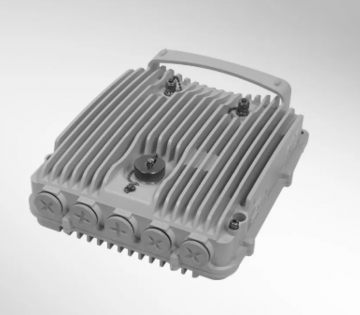
Wtm4000 2

WTM4000

The WTM-4000 platform offers a portfolio of all-outdoor radios with a maximum capacity of 20Gbps. This platform offers the possibility to work single or dual band, which means that one can work on two frequencies at the same time. One can for instance chose for a high capacity in the E-band (70/80GHz) will opting for reliability on the second interface with e.g. a link on 18 or 23GHz.